Showing posts with label architecture. Show all posts

Thursday, January 16, 2014

Back to School, NYC Part 2 - The Fun, Creepy, Cool 1970s

I ran into a friend on Columbus Avenue. We hadn't seen each other in over twenty years but we dropped into comfortable conversation after a few minutes the way people sometimes do when they have been linked through school, neighborhood and family for a lifetime. After catching up on each other's news he suggested I bring my family to Sunday mass at Blessed Sacrament. He would be reading the Liturgy. Afterwards he would take all of us on a tour of our old school.

For years I had walked by the catholic church on West 70th street without bothering to step inside. At first I was always in a hurry so I would put off visiting Blessed Sacrament the way I might postpone spending time with a relative who would forgive my neglect. Later, when business took me out of New York and often out of the U.S., a stop at Blessed Sacrament never seemed like a priority during Upper West Side visits. I had spent years marking every Sunday, holiday and special event in that church. A visit could wait another week, then another. Suddenly it was decades later and I was walking up the main steps of Blessed Sacrament for the first time since my eighth grade graduation. This time I was accompanied by my then 12 year-old son and his proud grandmother. My husband lingered over coffee and e-mails at a nearby cafe.

I'm almost certain the line of statues that stand to the left of the church steps (Philip Neri, Francis de Sales, John Vianney, John the Baptist de la Salle) shared a bemused glance with those that stand to the right (Alphonsus Ligouri, Francis of Assisi, Charles Borromeo and Vincent de Paul)when they saw this "bad Catholic" showing up at church for the first time in forever. Once inside, I'm pretty sure my old friends Thomas Aquinas and Catherine of Siena glanced my way with raised eyebrows. As a child I had gazed up at their stained glass images through many church services.

We walked down the center aisle toward our seats. The familiar creak of the pews, the thud of kneelers falling into place before mass, the scent of incense and warm canldewax and the glorious architecture that I had all but forgotten overwhelmed me with memories. Even as the service began I whispered to my son about these things but I stopped, remembering that at any moment, if this had been long ago, a nun would have stopped my rudeness with a poke on the shoulder and a glare that meant lunch detention. I straightened up, looked forward and let my mind drift just like in the old days.

I remember when we were children walking into Blessed Sacrament for mass each Wednesday morning. The rule had long been "no taps allowed" on shoes. The small metal pieces that mothers had attached to the soles of shoes to reduce wear were noisy and damaged floors but we loved the sound. The taps had come off only to be replaced by us children with flat, metal thumbtacks. The moment our shoes touched the terracotta tiles of the church each Wednesday we sounded like we were on our way to a tap class not confession. Teachers would stop lines of students to have them pull thumbtacks out of their soles. Most of them would find their way, face up, onto church pews instead.

Back at our desks we would take notes in class in the neat cursive of all Catholic school students while passing notes in graffitti-style bubble letters. "Do you like me? Yes. No." Despite being distracted, hormonal middle school-aged children, our teachers managed to suffuse our minds with ideas that mattered - about world history, classical literature, our roles in society. The undisputed heroes of that time were the ultimate teaching team, Mr. and Mrs. Gavila. They didn't lecture, they led discussions, brought passion to every lesson and encouraged informed debates about current events and politics. The respect they extended to us alerted us kids that we were on our way to adulthoods that could matter. We reciprocated their attention with worship.

But not all was serious study. There were bigger issues to contend with like what to wear to birthday parties and which sleepovers to attend. These events were always a little more special when classmates lived near celebrities. A sleepover on West 77th meant you might run into Henry "The Fonz" Winkler on his way in or out of his parent's building. A visit to a friend on West 73rd meant a possible brush with CHiPS star Erik Estrada. But the Holy Grail was an invitation to a playdate anywhere along West End Avenue in the West 60s - Robbie Benson territory!

Afternoon visits to a friend's apartment at The Dorilton on West 70th Street were memorable, even without celebrity sightings. Architecture historian Andrew Dolkart has described The Dorilton as possibly "the most flamboyant apartment house in New York" but I knew it then only as the best place in my neighborhood to play hide-and-seek. My friend was the daughter of a conductor who traveled with a symphony orchestra. The apartment where she lived was enormous - and it seemed so especially at the time. We would take turns hiding under heavy furniture in endless rooms. We counted to 10 draped in lace, crouched under a table that stretched the length of a formal dining room. We dressed up Barbies by towering windows that showcased the landmark building's "opulent Beaux-Arts style limestone and brick exterior, featuring monumental sculptures, richly balustraded balconies, and a three-story, copper and slate mansard roof." (Oh, if I'd only known then what I can Google now.) The Dorilton, with its elaborate decor and interiors thick with velvet and silence, impressed me only as peculiar.

The Dorilton may have been my favorite place to play hide-and-seek but The Danielle, a short building that shares a wall with Blessed Sacrament Church on West 70th Street, was my home-away-from-home. All of my best friends lived in The Danielle. We would thunder up and down its stairs and run through its hallways carrying board games and gossip between apartments. Our moms shared stories about child-rearing and rent control. The Danielle echoed with the sounds of families living their stories out loud in so many languages. Its architecture may not have left a mark on history but every one of its unremarkable details is etched in the memories of the children who grew up there during the 1970s.

The only time of year more thrilling than back to school at Blessed Sacrament was the week before summer break. We would bend over our books, foreheads moist with sweat, trying to focus on school work that already seemed too distant to matter. On the last day of school, West 70th street would come alive with the screeching of joyful children pouring out of the school for the last time that year. A final round of "Saluci!" might be played, one last run to Vinnie's Pizza for a slice might take place then the summer could begin.

That's as far as my memories went that day at mass. The church service was over quickly and soon our little group was on its way along the left side of the church toward the marble steps that lead into the school. On the way we passed an area where a statue of St. Lazarus used to stand. I remembered how one of its feet had been worn down by decades of reverent touch. An unblemished statue now stood in its place. That was the first sign that much of the Blessed Sacrament I was about to see would have changed but I had a feeling the original spirit of the school had endured.

Sunday, March 11, 2012

B. Altman and Comapny: The Grande Dame of NYC Retail

Early mornings along New York’s busiest avenues always fascinate me. The city may never sleep, but it does rest, and these pre-sunrise moments offer a glimpse of the city before she’s camera-ready. A diva in repose, if you will. Then the sun rises across the East River, and west-facing windows along Manhattan fracture the beams of light and cast them in every direction. In an instant, it’s as if someone has thrown a switch on a movie set and shouted “Action!” The diva roars to life.

One recent morning, shards of reflected sunrise bounced off a building at the corner of Fifth Avenue and 34th Street, and the effect was so beautiful that it drew my attention away from the flashy Empire State Building across the street. I recognized this shimmering 12-story building from my childhood.


In the 1970s, the building was home to B. Altman & Company, an elegant, glamorous department store that I loved to explore while my mother worked behind the counter for Christian Dior. Given only 20 or 30 minutes at a time to roam, I’d hurry along polished wood and smooth red carpet toward escalators that took me to different worlds on each floor. There were fashions by Halston and Calvin Klein, furs, enormous wedding dresses and ball gowns, and even a furniture section to play in (with each area decorated in things like classic English or chrome and shag). One of the top floors featured a children’s book department that always got me off schedule.

By the 1980s, B. Altman & Company was in decline. It was a stuffy, sad place where shoplifters and gangs of “wilding” teenagers stole merchandise off shelves. By the late 1980s, the store was bankrupt. It closed and was largely forgotten.

Buildings talk, and that morning, shimmering with broken sunlight, the impressive facade of 365 Fifth Avenue hinted at a grander history than the one I remembered. I decided to take a closer look at its past.


It’s hard to imagine now, but the intersection of 34th Street and Fifth Avenue used to be a farm with a stream running across it toward a nearby pond. It wasn’t until late in the 19th century that fashionable New York was drawn to the area by the construction of dignified new buildings. The original Waldorf-Astoria Hotel emerged on 34th Street (on the site that would eventually become the Empire State Building), and soon Fifth Avenue was recognized as New York’s most exclusive shopping district.

In 1906, the B. Altman & Company firm built a store along the east side of Fifth Avenue that stretched from 34th Street to 35th Street.


A few years later, a Madison Avenue portion was added to create a store that would occupy an entire city block. According to a company catalog, it was to be a “source of infinite resources…equipped with every device calculated to contribute to the greatest efficiency of service; in brief, a store of the highest modern order.”


B. Altman & Company interiors were as impressive as the building’s Italian Renaissance exterior.


The department store was known for its grace, proportion, and a “pervasive atmosphere of dignity and refinement.”


It was described as a “luxurious environment which every woman of taste and breeding appreciates.”


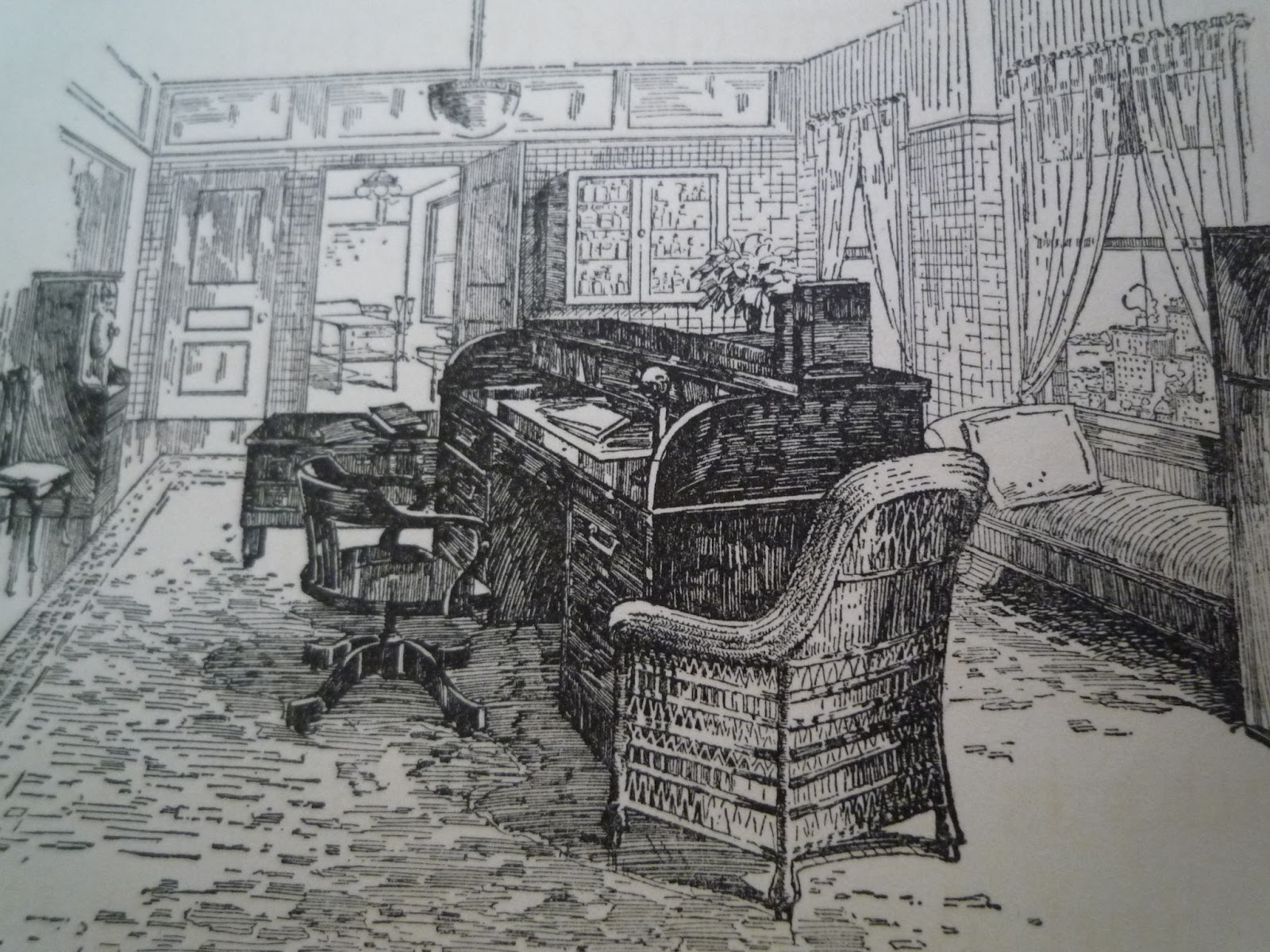
Physician’s offices and a 7-bed infirmary were located in the store for the care of employees and for customers who might be “seized with sudden illness while in the establishment.” The store even featured a Mourning Department “generously supplied with every essential of the correct mourning outfit.”


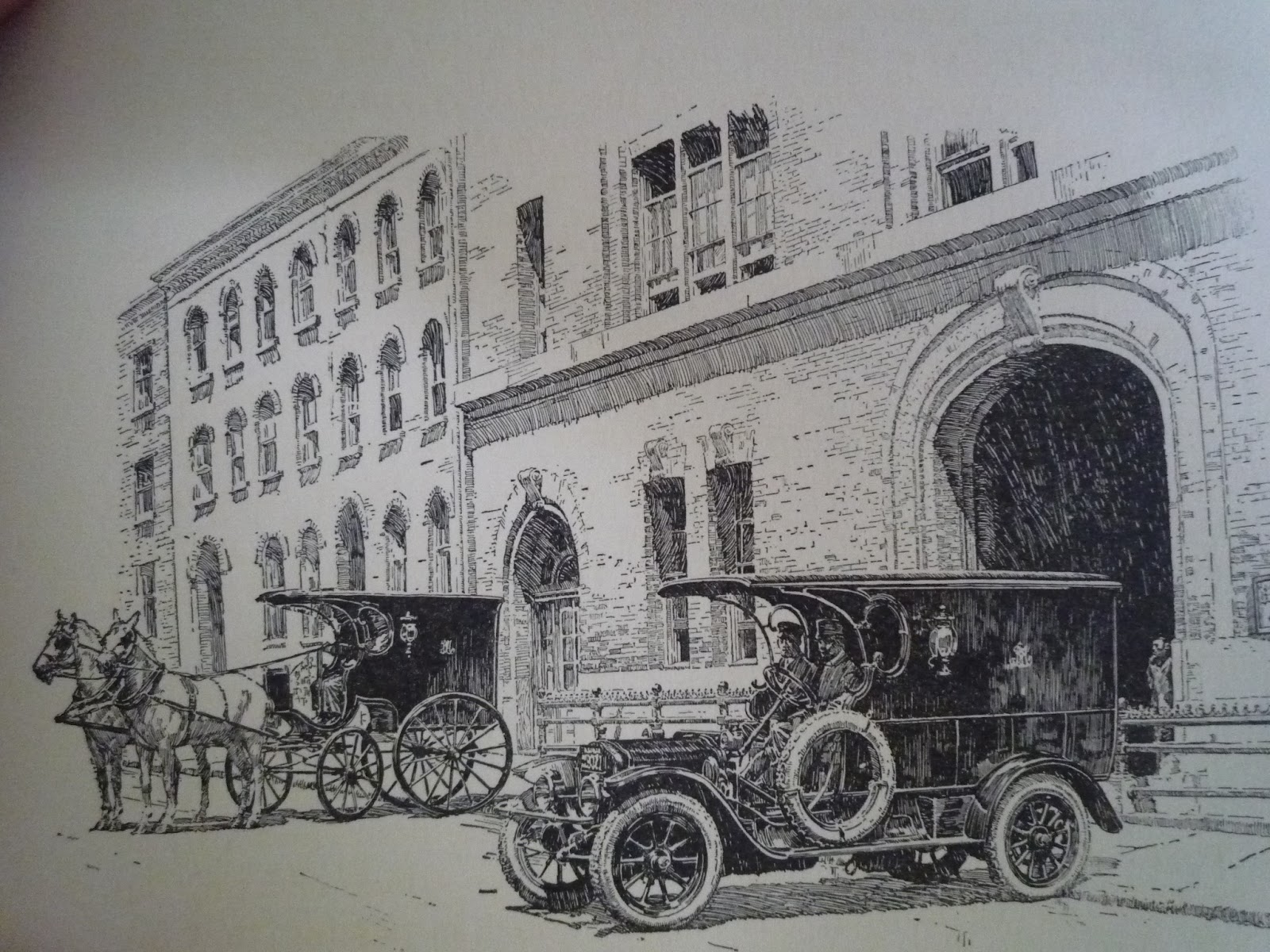
A Delivery Department was housed in a six-story garage on 36th Street where 200 horses, 157 horse-drawn carriages and 85 motor wagons were kept.

For more than 80 years, the magnificent B. Altman & Co. served customers and employees with unequaled courtesy, professionalism and attention to detail. Since its closure in 1989, no store in New York has ever matched its excellence.

The building that once ruled New York City retail is now home to a branch of the New York Public Library and to the Graduate Center of the City University of New York (CUNY).

The next time you visit either of those establishments, rewind the decades to imagine the many lifetimes lived by 365 Fifth Avenue.

Share your own recollections of B. Altman's finest days (and read the memories of former B. Altman shoppers and associates) at The Department Store Museum web site. Read this article as it appeared originally at Ask A New Yorker.

* All black and white images were featured in a B. Altman's catalog published in 1914. The logo is from the Department Store Museum.


Friday, March 11, 2011

A Little Rain, Much Architecture: The Highbridge Bronx Tour


When was the last time you strolled in the rain around a Bronx neighborhood looking for architectural gems within a few blocks of Yankee Stadium? A group of 12 weather-proof preservation conference attendees did just that last weekend, basking not in the sun but in the company of likeminded "history buffs and detail geeks." William Casari, assistant professor at Hostos Community College and a Bronx resident, was accurate when he defined himself and our group as such. He led us on a tour of Highbridge in the West Bronx that offered a close look at a borough's past and present through the prism of architecture.

The tour included a stop at Macombs Dam Park, which is now the site of the new Yankee Stadium. Next, we enjoyed an informative talk about Jerome Avenue’s finest buildings then a visit to Park Plaza Apartments, a building rich with Art Deco details and Mayan motifs. A climb up Jerome Slope offered a panoramic view of Highbridge plus the opportunity to explore the area further.

Every step seemed to offer an architectural detail to capture in a photo or a nuance about life in the Bronx. A stop at a “step street” became even more interesting when a man at Diaz Superette mentioned that an out-of-control car had once launched down its full length, landing in a pile on the sidewalk below. At Noonan Plaza, a series of 7-story apartment buildings designed by Horace Ginsbern and Marvin Fine, residents carried groceries and children past a group of visitors talking about what seems like an ordinary building. In a window a little girl sat peering down at a bare quadrangle that once boasted a waterfall, a reflecting pool, swans and a Japanese-style bridge.

Several times, neighbors stopped to ask with curiosity what we were looking at then offered hospitality – by opening a locked door or by offering permission to enter a lobby. Local residents seemed unaware of the not-so-obvious treasures in their communities but Morgan Powell, a guest on the tour, is making an effort to change that: he leads walking tours in the Bronx especially designed to inform and inspire residents with updated local history.

The variety of architectural styles found on every street in Highbridge was a source of constant delight during the tour as was the element of surprise. Again and again, behind the facades of worn buildings, Mr. Casari would reveal elegant marble vestibules, Art Deco mirrors, antique signage, terrazzo floors and, in one case, the luxury of open space in a double height lobby.

Rain and high winds didn’t hamper 12 intrepid New Yorkers last week. Our enthusiasm was well-rewarded in a borough whose significance and beauty are frequently overlooked.

The following are images from that tour. Enjoy then visit hdc.org and bronxriver.org for details about upcoming tours and events.

Friday, December 10, 2010

Little Italy: A Building Tells a Story


When Old St. Patrick’s Cathedral in Little Italy became New York’s first basilica last Sunday, all eyes, and camera lenses, were on the church but directly across the street stood an unassuming building that drew my attention. It turns out that 256-258Mott Street has an interesting past.

What is now a co-op building used to be known as the 14th Ward Industrial School. It was built for John Jacob Astor and his wife Charlotte in 1888 to serve, in the words of The New York Times over 100 years ago, “a district of wretchedness, poverty and squalor.” It became a school, run by the Children’s Aid Society, where impoverished immigrant children could receive daily lessons in “industry, thrift and cleanliness" along with hot meals.

The Astor’s bought the lot for $21,000, hired Calvert Vaux, the co-designer of Central Park, to design the building and paid $42,000 to have the Victorian Gothic structure built. The little red brick building on Mott Street became a safe haven for generations of children in a neighborhood that used to be part of the infamously violent Five Points district. Today its classrooms are residences and the building stands serene amidst cafes and boutiques.

Every one of New York's oldest buildings has a story to tell and each one seems worth repeating.

Monday, November 29, 2010

Central Park West Skyline: An Uncertain Future

Every time a neighborhood loses one of its favorite landmarks – an old bookstore, theater, bar or old-fashioned corner store – it’s heartbreaking for the immediate community. Now development threatens to ruin one of New York’s most iconic skylines – a view that if destroyed might be doubly heartbreaking if measured by the number of people its loss would impact.

The Central Park West Skyline is recognized by millions of local residents and out-of-town visitors as part of the city’s architectural history and a symbol of Old New York but that hasn’t stopped developers from planning changes to it that could permanently damage its familiar appearance. It’s hard to imagine looking out from the rooftop garden at The Met, from the path that circles the Reservoir or from Belvedere Castle to see that gentle skyline interrupted by glass towers but that is exactly what might occur.

“The threat to the Central Park West Skyline is one that emerges over and over again.” said Kate Wood, Executive Director of Landmark West! the non-profit organization that curates nearly 2,700 cultural and architectural landmarks throughout the Upper West Side. We discussed the issue that may become central to Landmark West’s preservation efforts in 2011.

CGW: How real is the threat of development to the Central Park West Skyline?

KW: The Central Park West Skyline is such an iconic part of New York City that everyone would assume that the skyline is safe. Surely you couldn’t build a monstrosity that could mar that skyline. But what we have seen is a consistent pattern to attempt to use the air space hovering above low-rise sites along and near Central Park West.

CGW: But as part of a Historic District aren’t the buildings that line Central Park West protected?

KW: The Central Park District is preserved but it doesn’t mean it can’t change at all.

CGW: What makes Central Park West architecturally significant?

KW: The area is a careful balance of buildings developed over time in three waves of development from the 1870s to the 1930s, from low-rise to mid-rise to the taller luxury apartment buildings with the twin tower-style design. The result is an up and down skyline where your eye can follow different waves through time. We think there’s a special quality there that if a new development is proposed we need to look at what the impact to the landmarks would be.

CGW: How difficult is it to fight the sort of development that would destroy the integrity of the existing skyline?

KW: What we’ve seen again and again is a pitched battle. Hundreds of people need to turn out just to make the point that this can’t happen.
We just can’t keep battling this way on a case by case basis. Through a study (conducted by architecture and planning firm Weisz+Yoes) we were able to investigate the future of development along Central Park West and its impact on the skyline. What the study identified were ten sites where we can foresee these types of proposals coming forward. This study allows us to be prepared to offer alternatives to development. Keep in mind that Central Park West is only one of four skylines. Any tools we come up with could be useful to other parts of the city.

CGW: What are some of the alternatives to development?

KW: Landmark West! and other non-profits are looking at the model of rural land conservation for solutions - The Trust for Public Land, for example. Ideally we should be working more collaboratively with property owners to help them see that they don’t have to build to their maximum allowance in order to reap benefits. Instead they can exchange those rights for some other valuable incentive, taking alternative value from their sites and building modestly within their zoning. That incentive carrot together with the stick of regulation would make all the difference.

CGW: It’s surprising that an organization like the New York Historical Society, an organization dedicated to the preservation of history, plans to add a 28-story tower to the skyline in a historic district.

KW: They’re looking at the American Museum of Natural History and seeing high attendance. They want to do something flashy and visible to be noticed and it becomes about marketing in a way that can have long-term destructive impact on the building. They have all these unused development rights on their property and they see this as a potential windfall but if they exploit their air rights there’s no guarantee the money would be spent to increase their endowment or services. In the meantime the city would be dealing with a permanent addition to the skyline. That’s just not a fair trade-off.

CGW: In a worst case scenario, the NYHS tower and a proposed condominium building over CSI would go up. What would be the immediate impact to the area?

KW: There would be the environmental impact. But people would suddenly realize what they had lost - one of New York's most beloved skylines.

(Additional notes from Landmark West!: It could also trigger a “domino effect” along Central Park West and throughout the city. Nonprofit and for-profit developers in each of the five boroughs, eager to exploit their own sites, would recognize the approval of these towers as a precedent opening the door for future development.)

CGW: What is the worst aspect of fighting institutions that are your neighbors right here on the Upper West Side?

KW: These battles are polarizing. People support and volunteer at the New York Historical Society, for example, and take their children there to visit and suddenly you feel like you are on the other side of the battlefield from them and that’s not what anyone wants.

CGW: What can New York City residents do to help ensure the skyline remains as it appears today?

KW: Now that public hearings (for CSI and the NYHS) are over these cases have gone into hibernation but with landmarks, even when they’re ‘saved’ they’re never really safe. Protecting these buildings requires our constant attention. They need a human force field around them and that’s why Landmark West is here otherwise there is no one to organize around these efforts. In January, Columbia University Graduate students in Urban Planning will build on the Central Park West Skyline report. Once we have some solid facts to go on it will be a matter of getting the political support from elected officials and talking with City Planning. Ultimately we have to have buy-in from the mayor. In the meantime we need to build grassroots momentum. Once we have a better sense of what sort of legislation needs to be put into place we will build a constituency.